US hyperscaler datacenters match Denmark annual carbon emissions
A study published in Nature Sustainability reveals that the rapid expansion of "hyperscaler" datacenters in the US has generated planet-heating emissions equivalent to the annual carbon footprint of Denmark. Between a one-year period ending April 2025, 403 of these massive facilities, which primarily support the growth of artificial intelligence, emitted approximately 25.7 million metric tons of carbon dioxide. This figure is two to three times higher than estimates recorded in 2018.
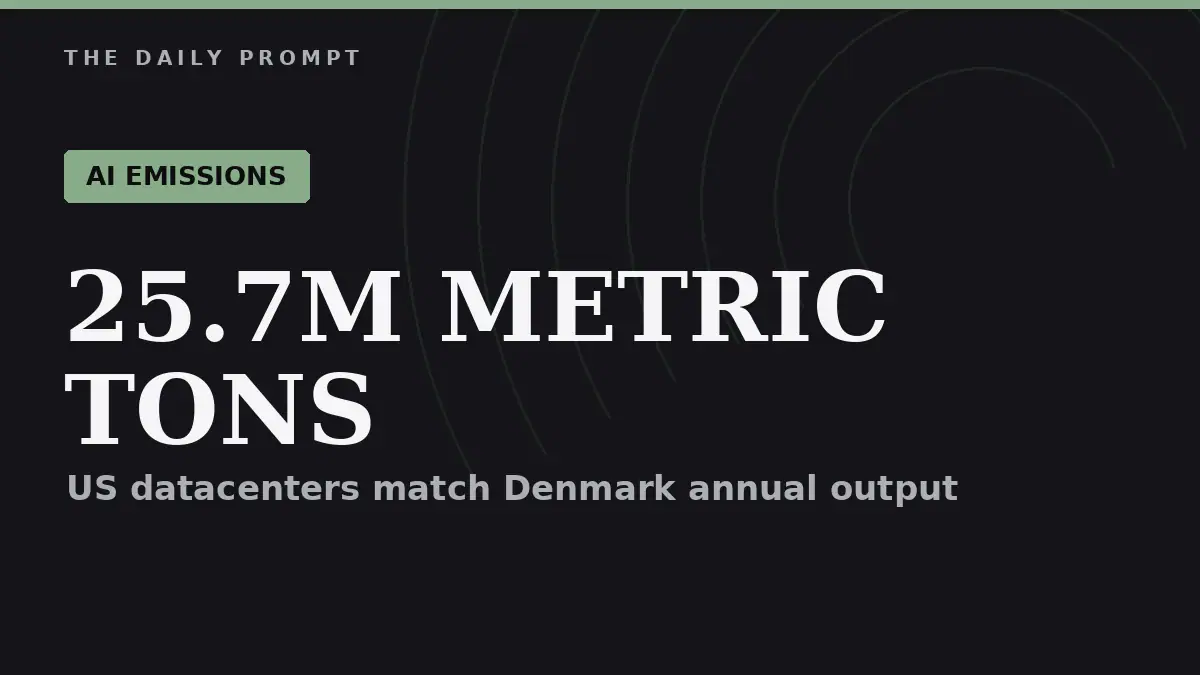
The research, led by Gianluca Guidi and co-authored by Harvard professor Francesca Dominici, found that these datacenters consumed between 68 and 99 terawatt-hours of electricity, representing 1.8% of total US power consumption. The demand is concentrated in states including Virginia, Oregon, Ohio, and Iowa. Dominici noted that because the number of facilities has increased since the study period, these emission levels should be considered a lower bound.
More than half of the energy used by these hyperscalers is derived from fossil fuels. The study highlights that the AI boom is currently underpinned by new gas-fired power generation, which is often favored over renewable sources like solar and wind. Former climate adviser Gina McCarthy stated that the reliance on fossil fuels persists despite the availability of renewable alternatives that could avoid lasting climate and health impacts.
Public backlash to these developments has grown, particularly regarding the Stratos project in Utah. A separate study found that Stratos could cause up to $690 million in annual health-related economic costs if it uses the dirtiest fossil fuel options. Burning such fuel would release up to 3,140 tons of particulate matter, creating plumes that could affect air quality in Idaho, Wyoming, Colorado, and Illinois. John Walke of the Natural Resources Defense Council described the project as a modern-day Trojan horse for air pollution.
In response to environmental concerns, Stratos developers have reportedly filed a new water application claiming lower requirements than historical agricultural use at the site. While some industry supporters, including Donald Trump, have defended the sector as a source of jobs and tax revenue, local communities continue to file lawsuits over noise and air pollution. In Memphis, Tennessee, Elon Musk’s AI company has even purchased homes near its facilities to mitigate local protests.
What to watch: Policy decisions regarding the regulation of gas-fired power at datacenter sites.
Editor's note: The draft effectively synthesizes the source material, capturing both the broad environmental findings and the specific case study of the Stratos project.
AI-generated and fact-checked against the original report; claims the gate cannot verify are held back.